Related Tags
Results for PLM
-

ACE 2023: Your Journey to Reimagine Your Possibilities
ACE 2023 has come and gone! It was an inspiring and collaborative experience for all attendees. Industry leaders, decision-makers, analysts, and Aras partners gathered in Orlando, FL, on May 2-3 for a premier PLM conference, which explored future technology… -

Why Risk Management is a Company-wide Responsibility
Risk management has never been more critical than it is now. The risks modern organizations face has grown more complex, fueled by the rapid pace of globalization. Why? A recent external risk that manifested as a supply chain issue at many companies quickly… -

The Meaning of Product Lifecycle Management
PLM and the Transition to SaaS This blog is a part of our new series of “Aras Primers” that provide simple definitions and basic information on concepts and applications relevant to the PLM industry. This blog will review the basics of PLM and why transitioning… -

Why You Need a Flexible PLM System
To start, let’s define some terms. First, what is PLM? Product Lifecycle Management (PLM) is an essential tool that helps manufacturing companies manage complex product development processes. However, traditional PLM systems often fail to meet modern… -
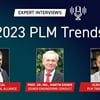
2023 PLM Trends
What trends will shape product lifecycle management (PLM) in 2023? We spoke to three PLM experts about this topic: Prof. Dr.-Ing., Martin Eigner (Eigner Engineering Consult), Ulrich Sendler (PLM trade journalist), and Jos Voskuil (PLM Green Global Alliance… -

Is CAD the Center of Your World?
Is your company CAD-centric? CAD-centric means your focus is on model-based 3D representations of a product. The revision of a part will be the same as the CAD version. Often this practice has been driven using file-based storage in Windows Explorer,… -

Do You Suffer from PLM Legacy Syndrome?
I come before you today with troubling news. Research has shown that a vast majority of companies in the manufacturing industries suffer from PLM Legacy Syndrome. But do not be dismayed, I also come to you today with a cure. The symptoms: The first… -

A Day in The Life Of A Multi-CAD User
Are you using your data efficiently? How do you keep the little things from falling through the cracks? Aras Innovator® is a platform that can help you stay on top of your product data and help you share it with the rest of the business and the supply… -

How to Make Your Data Actionable? It's All About Context
A recent article in Digital Engineering posits that companies need a framework and tools to gain actionable insights from data to see operational improvements. As they describe it: “The value of the analytics capability comes into play, however, only… -

You Need Automated Document Control, Mr. Skogen!
As most of you know, document control is critical in medical device development and manufacturing. This was also the case when I worked as an engineer in a medical device company. Engineering records drive medical product development, and the company… -

Make the Move from Digital Trauma to Digital Nirvana: 5 Key Elements
If you tried to perform a routine process with your product lifecycle management (PLM) software, made decisions without accurate data, or collaborated across departmental boundaries using meetings and spreadsheets you’ve likely experienced some level… -
Change Management in Context – A Foundation of System Lifecycle Management
If you haven’t noticed, the nature of change management in PLM is, well, changing due to exploding product complexities. It used to be that PLM was focused on changes to physical parts or physical assemblies (BOM). That was because PLM solutions and configuration… -

Fully Configurable SaaS in the Cloud
On March 23 Aras hosted Peter Bilello, president and CEO of CIMdata for a highly anticipated webinar focused on how SaaS PLM offerings are developed and built, and why the demand for SaaS products is growing rapidly. Mark Reisig, Aras vice president of… -

Is SaaS the Key to Your Future PLM Success?
There has been considerable discussion of the substantial cloud benefits to enterprise PLM systems, but there is another element of this conversation that is just as important for long-term business transformation success: using a SaaS offering with the… -

Are You Ready for Enterprise SaaS PLM?
If you are like most companies using a PLM solution, you may be wondering “how will I know when I’m ready for an enterprise SaaS solution?” Maybe you find yourself in one of the situations outlined below. Let’s take a deeper dive into some of the typical… -

The Key to Complex Future Products: Intelligent Requirements
The Tower of Babel, Esperanto, and Creating a Common Second Language Product complexity is defined in many ways. You may be familiar with the story of the Tower of Babel . Although the biblical meaning of it has to do with human arrogance, I will… -

Resistant or Resilient? Change Happens
Looking to develop and strengthen your extended enterprise ecosystems? You’ll need to digitally transform. Industry ecosystems require a massive amount of change – meaning new ways of thinking, connecting, and collaborating – which require access to a… -

2022 Predictions in Business and Technology
Introduction Over the past year, it’s become clear that the pandemic—the greatest disruption in my lifetime—has not only driven us to work, learn, and consume remotely, but has reshaped our economy and our own behaviors much the way the Great Depression… -
Your Business Model is Old: Make the Move from Reactive to Resilient
Making the move from a reactive business model to a resilient one means you are creating an environment capable of adapting quickly when your business needs to change dramatically, or sequentially over time. The move toward resilience shouldn’t be painful… -

2021 in Review
As we head into the new year with the pace of change continuing, digital transformations accelerating, and connectivity increasing, I’d like to take a few moments to reflect on our 2021 predictions. Remote Work: Correct Predicting that in 2021 the economy… -

Disrupting the PLM Industry, Again!
In today’s rapidly evolving business environment, an organization’s ability to continually adapt is critical to staying current with evolving digital processes. Product complexity is not going anywhere, therefore, we, at Aras, need to continually evolve… -

A Drone and its Digital Thread
AFRL Summer Program The United States Air Force’s Air Force Research Laboratory (AFRL) and their innovation partner, The Wright Brothers Institute (WBI), joined forces this past summer to sponsor an internship program, The Summer of Innovation – Digital… -

Managing Design Intent: What Role Does PLM Play?
Legacy PLM systems focus on design data without enabling traceability to design intent. Without traceability to design intent throughout a system’s entire lifecycle—which includes design, manufacturing, operation and maintenance— it’s not possible to… -

Agile Supports Faster Upgrades
Successful digital transformation is not a static initiative. Simply implementing a system or systems, no matter how perfectly they meet your current business needs, cannot anticipate the needs of your business in the future. Business needs are constantly… -

Design Silos: Overcome the Communication Gap to Develop Complex Products
Engineers from many different domains design and build today’s complex products. They commonly work in silos, which can cause problems that eat up time and money down the line. Design silos aren’t going anywhere, but companies can manage them—and improve…


